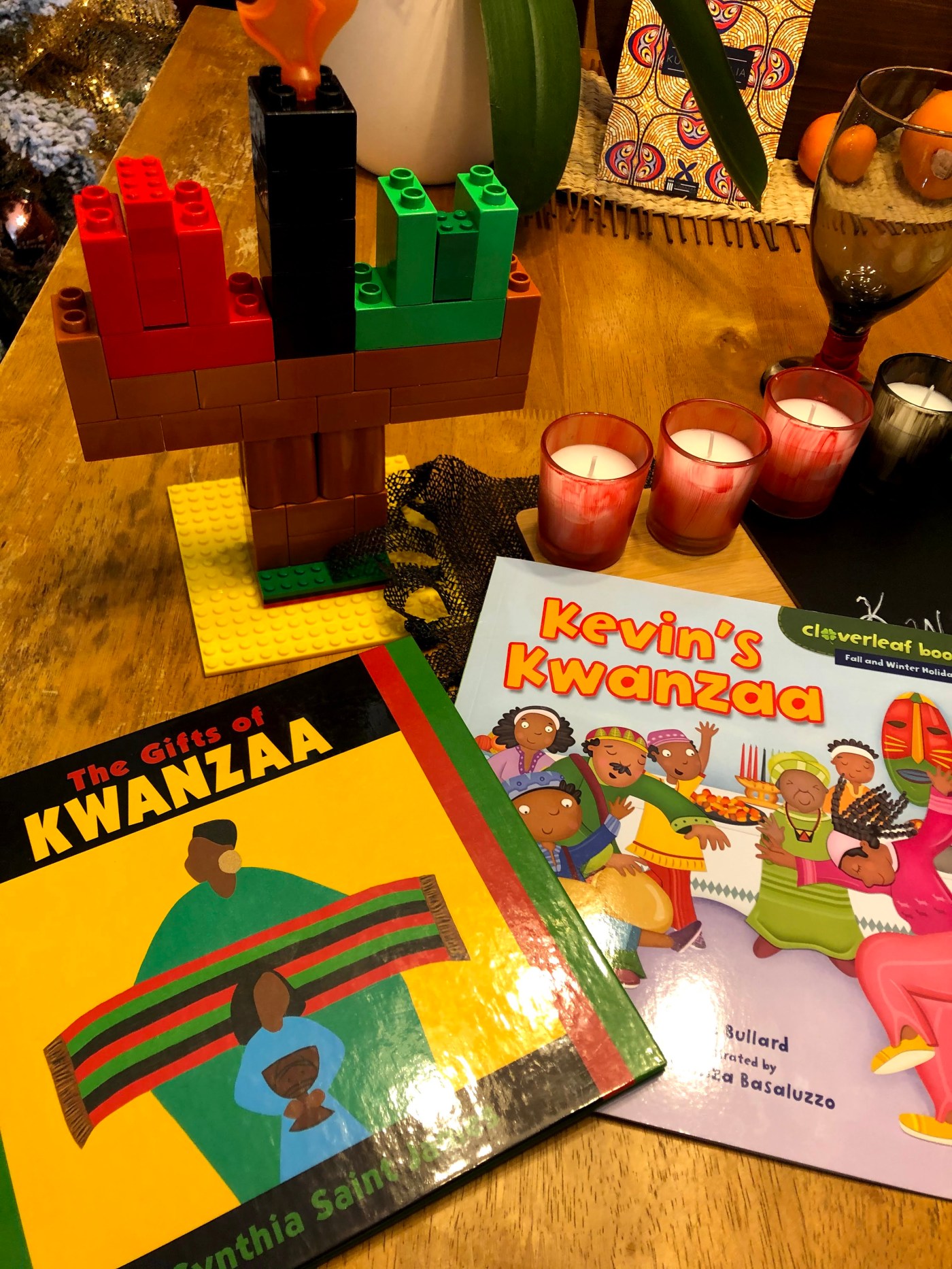
We LOVE Kwanzaa. Every year we take these last seven days of the year and do our best to refocus our energy to enter into the next year in the right spirit. I must say, 2020 has been one of those years that ‘s going to take a lot more focus and energy than usual. This year however, we aren’t doing our same ole, same ole. I’ve been working at a fevered pace since lockdown in March to turn the personal page into a real platform for helping other families with Learning at Home. It’s no longer a page full of personal posts and cute baby pictures that I used to keep the family abreast of what was going on in our lives. My little baby page has grown up. So this Kwanzaa, I’m trying my best to share that growth with anyone that wants to see it.
So today, on Kwanzaa Day number 3, as part of my Ujima, which is Collective Work and Responsibility – I officially dedicate the blog to all of you, the Readers. Let us begin.
If you take a look at the Instagram page @MamaSweetBaby you’ll see a flurry of posts about Kwanzaa this year. Personally, I’ve celebrated Kwanzaa for the last 30 years at least and have tons of Kwanzaa related items. I put away Kwanzaa the same way the average person puts away Christmas. I have various Kinaras, African cloths, cool trinkets, books, etc., that I’ve gathered over the years from Artists, crafts fairs, gifts, specialty shops and online marketplaces. I’ve been very conscious when it comes to shopping Black and my collection shows. But what I’m seeing this year, with the racial disparages and social unrest, is yet another reawakening of the African Diaspora much like the one that incited Dr. Karenga to create the very first Kwanzaa celebration in 1966. And along with that awakening comes a need for knowledge. For many, this is their first Kwanzaa – ever. Where to begin? My various parent and schooling groups were posting question after question in regards to the holiday. I even appeared on my first Podcast EVER as an expert guest on the subject. To me it was the same as if someone had said, “So, tell me about this thing called Christmas…how do you celebrate it?”. How do you become an authority on something that you “just do”? The thirst is real and I had the water sitting in a pool next to me all this time and I never thought there was a drought. I’m extending my Unity Cup for you to drink – take a deep pull – please.
I left the boxes in the closet folks. I’m starting from scratch with you. And I didn’t even try to prepare in advance. Beginning on Day 1, December 26th, I cleared my table of Christmas stuff and said “Today is the First Day of Kwanzaa.” My children were SO confused. I had a mail order box Kwanzaa kit by Kwanzaa Kit Co. that I had never opened and a bunch of Dollar Tree items. We were going to have a DIY Kwanzaa if it killed me. First, let’s talk about that box kit. It was perfect. No lie, you don’t need anything else to celebrate Kwanzaa other than Kwanzaa Kit Co.’s set. I don’t make a dime for saying that to you. If you need a kit, order this for next year. The end. It’s beautiful, complete, and informative. Just get it. In fact buy one for you and your Mother-in-law who still thinks Kwanzaa is some pagan African holiday. For this year however, it’s a little late. You need to do the next best thing and that’s DIY it. Here’s what you need:
- A Kinara – that’s a Candle holder. I bought two Dollar Tree cutting boards and hot glued them together so that it would be long enough for seven candles.
- Seven Candles – Three Red, Three Green, One Black – use whatever you can find. I used white votives in tiny glass holders and then used acrylic paint to paint the glass whatever color I needed. You could also cover the the glass in white glue and wrap them in tissue paper for another easy solution.
- A Mkeka – that’s the mat everything sits on. The suggestion is that the mat be a woven grass material but I made mine from a roll of shelf liner.
- Muhindi – ears of corn – one for each child in your family. Heck, I even figured out a way to craft some corn.
- Zawadi – Gifts for the children – they should be special and personal. A creative or handmade gift is also nice. Books make wonderful Kwanzaa gifts.
- A Unity Cup for libations. We filled ours with water and poured a little in a small plant while we called out the name of a cherished ancestor. Can’t figure out who to recognize? Call on the greats – Harriet Tubman, Martin Luther King, Malcolm X … I’m sure you can come up with a name of two.
- Fruits and Vegetables to represent the Harvest. Not only is it beautiful, it also pays homage to actual harvest celebrations held in Africa.
That’s it. Some will say I’m forgetting a few things – like African patterned cloth for the table itself or figurines or a few other things. Nope. What I listed above should do the job. You can start compiling your own box of things like I did for future celebrations but they are NOT necessary. You should keep a few things in mind about this holiday. 1) There are no real rules … because it’s YOUR holiday 2) It should be personal and creative. 3) It’s not about the stuff, it’s the sentiment 4) It should not be expensive to do 5) There are no real rules … because it’s YOUR holiday … take special note of that one.
Once you’ve assembled your Kwanzaa items and setup your special space it’s time for the most important task of all – getting the family onboard. Kids are pretty easy. As long as you don’t pull them away from things that they love, they pretty much fall in line. Remember that when you call them to light the candles each evening just as they get into a marathon session of Fortnite. There is no set schedule for your Kwanzaa reflection so keep that in mind when you decide what time to do this. For my family, after dinner works best, but that’s my family – they’ve been trained pretty well and look forward to doing this each year. I full well expect my children’s children to have Kwanzaa each year as well. Train up a child…
The hard one to win over is the other adult in the house. I’m lucky. My husband knew about these things before we married. He had grown up in a “Black is Beautiful” “Power to the People” type household and even though they never celebrated Kwanzaa this was right up his alley. Your spouse however may give you a little push back. Be prepared to state your case and reemphasize that Kwanzaa is truly for the future generation – the children. Use burning examples of current racial tensions, Jim Crow, the Doll race studies, the catalyst for the March on Washington, and the benefits of the Black Panther Movement. This is a very important thing you’re doing – coming on strong would be a good choice. If you’re well researched but your arguments still fall on deaf ears, try watching “The Black Candle” on Amazon Prime together. The documentary sums up the need for Kwanzaa beautifully and who can argue with a documentary narrated by the late Maya Angelou?
Now that you’ve got the formalities out of the way, simply celebrate. Each day, as a family, talk about the principles of Kwanzaa. Try to embody them that day so that you can embody them in your lives. Let the children ask questions, and do your best to answer them. Don’t have the answers? Use technology to your advantage and look it up. Check out books from the library on the subject or just download one or two to your tablet. For next year you can buy a personal copy of any favorites you find at your leisure. Can’t find anything on Kwanzaa? Just read anything written and illustrated by a person of color. Have open discussions with the children about your experiences with race and how you feel in your skin. The discussions I have with my children still floor me from time to time. And it is SO healing! Teach the family that “Habari Gani?!” means “What’s the News?!” in Kiswahili and that they should answer you with the principle of that day. Pour out your libations. Maybe sing the Negro National Anthem. Teach it if you need to. Then light your day’s candle. Just make sure when they leave that Kinara, they feel proud to be Black.
In case you’re curious here is an abbreviated list of things we have done on each day of Kwanzaa. Please, feel free to use these, or just come up with your own or add to it.
Day 1 – Umoja – I typically have the family set up the Kwanzaa table together. See, nothing heavy.
Day 2 – Kujichagulia – This is a reminder to be the best you can be. We talk about our upcoming goals and bring the family up to date on what we’ve completed – including our failures. Sincerely offer help with those goals. This is a great day to watch a black movie together as a family – for us and by us.
Day 3 – Ujima – Our community service day. This year it’s going to look very different since we’re in quarantine (no one is sick but we have to be extra careful because of the medically sensitive youngest child) so this year the goal is to plan ways to help our communities while continuing to social distance. First on the list is to write and send colorful greeting cards to elderly family and friends we haven’t seen in a while with current photographs of the children enclosed.
Day 4 – Ujamaa – My favorite day! We buy local and we buy Black. This year will be no different except we’ll be buying online. Even though the focus is not on the creative today, I’m a huge supporter and collector of Black Art and Artists. We’ll top off the day with creating a piece of our own that is NOT for sale.
Day 5 – Nia – Purpose is very important. This is when I want to hear from the children their plans of continuing this work in the future in their lives and with their families. I need to make sure we continue this momentum. Study a notable African American who has impacted the entire race and the world with their presence on the planet.
Day 6 – Kuumba – Creativity. I pull teeth with this one in my house full of testosterone. They pretend to be embarrassed and the older twins want to make fun of one another. I’m counting on the youngest this year to reset this day and take the lead on this one. He has a ton of talent and loves to perform for the family. Also keep in mind, this is New Year’s Eve! Have a big dinner, wear your best, and perhaps enjoy a family talent show. On this evening, present the children with their Presents.
Day 7 – Imani – Faith. Charge them with continuing the spirit of Kwanzaa until the next celebration. Thank the family for their participation. Pray together for a prosperous and safe New Year. I usually present them each with one extra gift – a journal – to list and reflect on what they are going to accomplish in the next 12 months.
Fin.



 @Mamasweetbaby
Leave a comment